
CAMWorks ShopFloor SP4 (x64) Download [2027] – Features, Installation & Complete Guide
CAMWorks ShopFloor 2020 is a manufacturing-focused application designed to help machinists, CNC operators, and production teams access machining information directly on the shop floor. It works alongside CAMWorks manufacturing workflows, making it easier to review CNC projects, inspect machining operations, and understand how a part is prepared for production.
Instead of relying only on printed setup sheets or repeatedly returning to an engineering workstation, shop-floor personnel can use digital manufacturing information to review jobs and machining details. This guide explains what CAMWorks ShopFloor 2020 does, its main capabilities, how it fits into a CNC workflow, and what to check before installing it in 2027.
CAMWorks ShopFloor 2026 SP4 (64-bit) Download Links
| Rapidgator | Nitroflare |
|---|---|
| 🟣 DOWNLOAD | 🟡 DOWNLOAD |
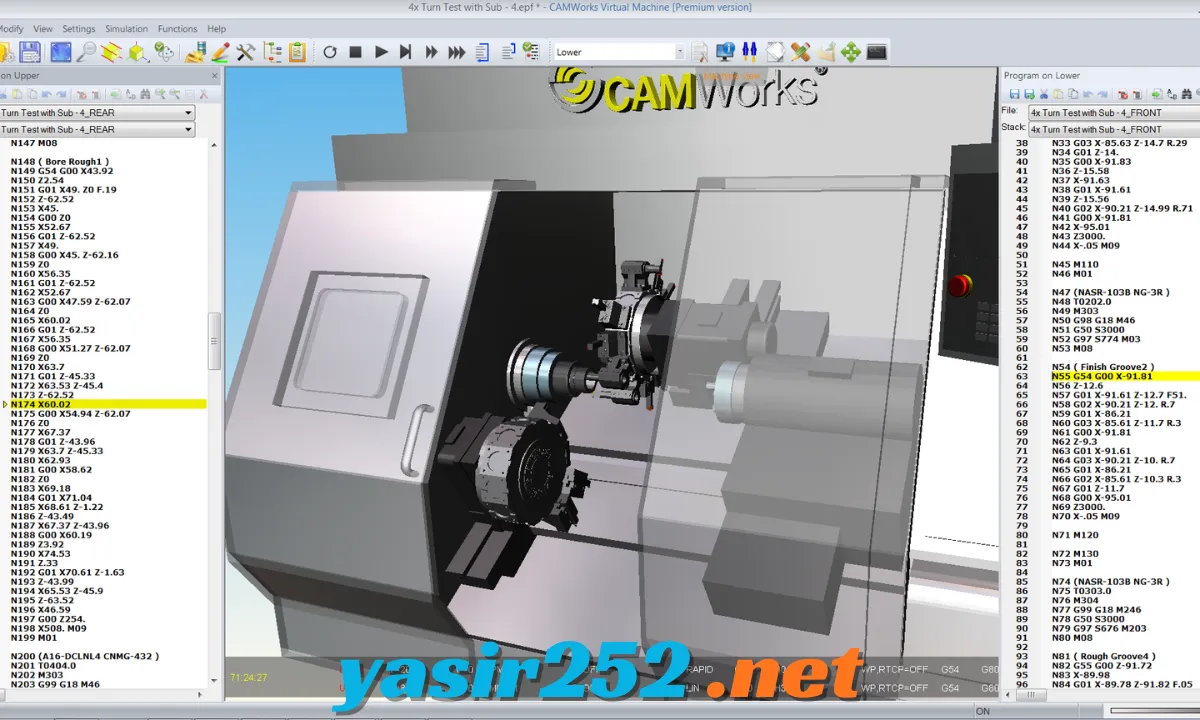
CAMWorks ShopFloor 2020 – Software Information
| Field | Details |
|---|---|
| Title | CAMWorks ShopFloor 2020 |
| Category | CNC Manufacturing and Shop-Floor Visualization |
| Developer | CAMWorks / HCL Technologies |
| Publisher | HCL Technologies |
| Version | 2020 |
| Operating System | Windows (check compatibility with the specific release) |
| License | Commercial software; availability depends on the applicable license |
| Primary Use | Reviewing and communicating CNC machining information |
| Related Software | CAMWorks, SOLIDWORKS |
| Target Users | CNC operators, machinists, manufacturing engineers, production teams |
What Is CAMWorks ShopFloor 2020?
CAMWorks ShopFloor is a standalone digital manufacturing application introduced with the CAMWorks 2020 product generation. It connects CNC programmers with machinists by packaging manufacturing information into a digital file that can be opened and reviewed on a shop-floor computer.
The application is designed primarily for reviewing and verifying machining information rather than creating complete CNC machining strategies from scratch. It helps operators understand part geometry, inspect toolpaths, review G-code, and access setup documentation before production begins.
Key Features of CAMWorks ShopFloor 2020
1. 3D Part and Assembly Viewer
Interactive 3D Viewing: Open machining models and assemblies in a digital environment. Rotate, pan, zoom, and inspect the geometry to understand the part before starting production.
2. Toolpath Simulation
Virtual Machining Verification: Review machining toolpaths through 3D simulation. Material-removal visualization helps operators understand how machining operations affect the workpiece.
3. Step-Through CNC Simulation
Operation-by-Operation Review: Step through individual tool movements and machining operations. This makes it easier to inspect a CNC program and identify potential problems before running it on a physical machine.
4. G-Code Viewing and Editing
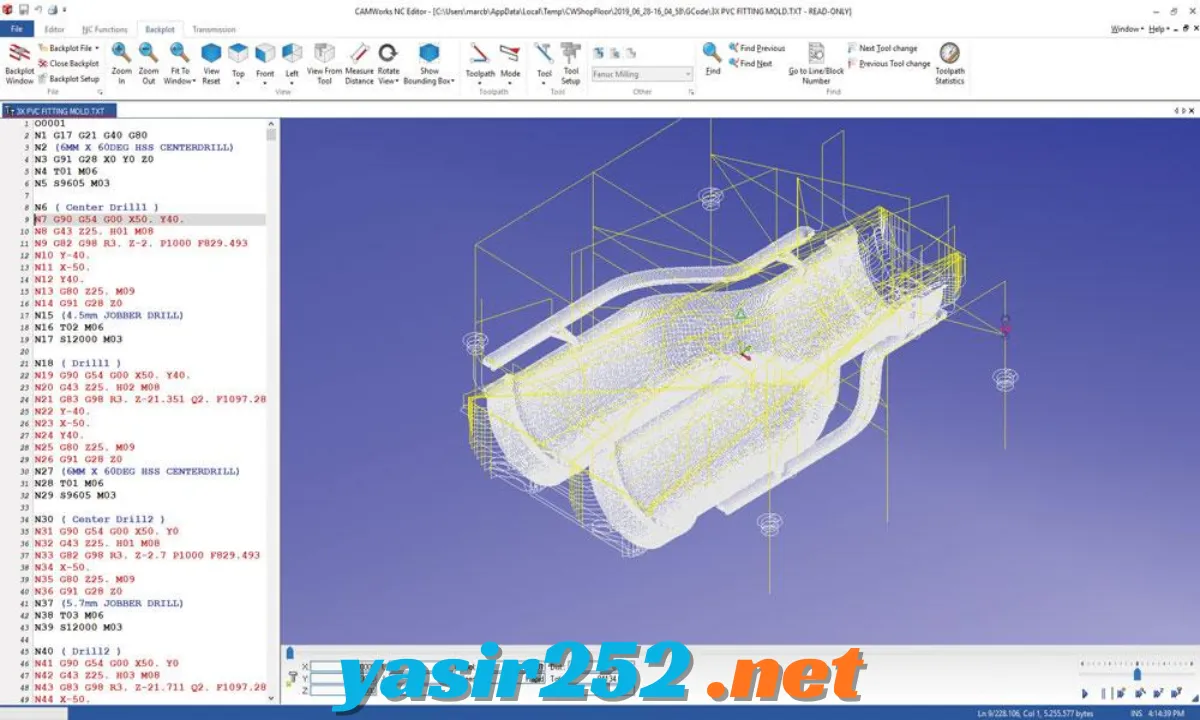
Integrated NC Editor: Review CNC program instructions through the NC Editor. The editor includes back-plotting capabilities to help visualize programmed movements and inspect the resulting toolpath.
5. Digital Setup Sheets
Manufacturing Documentation: Access digital setup sheets containing important job information. This helps operators understand machining requirements without relying entirely on printed documents.
6. Tool List Information
Tooling Details: Review the tools associated with machining operations. Having tool information available alongside the part model helps improve communication between programming and production teams.
7. MBD and PMI Information
Manufacturing Dimensions: Display, search, and filter Model-Based Definition (MBD) and Product Manufacturing Information (PMI) data when supported by the published model. This can help machinists review dimensions, annotations, and manufacturing requirements.
8. Automatic File Change Detection
Revision Awareness: CAMWorks ShopFloor can check for changes in associated CAD or CAM information. This helps alert shop-floor personnel when a model or manufacturing file has changed, reducing the risk of machining an outdated revision.
9. Digital Manufacturing Workflow
Centralized Job Information: Combine the part model, CAM data, toolpath simulation, setup sheet, tool list, and CNC program into a single digital ShopFloor file.
10. CNC Communication and Collaboration
Shop-Floor Coordination: Provide machinists and CNC programmers with a shared source of manufacturing information. This can reduce misunderstandings and improve coordination during production.
How CAMWorks ShopFloor 2020 Works
CAMWorks ShopFloor follows a publishing and viewing workflow. CNC programmers prepare the machining project, publish its manufacturing information, and share the resulting ShopFloor file with production personnel.
Typical workflow
1. Create the CAD Model
Prepare the part or assembly in a supported CAD environment.
2. Generate CAM Data
Create machining operations, toolpaths, and CNC program information.
3. Publish ShopFloor File
Package the model, machining information, setup sheets, tool lists, and other supported data.
4. Open in ShopFloor
The machinist reviews the published file on a shop-floor workstation.
5. Verify Before Machining
Inspect the model, toolpaths, setup details, and CNC program before production.
The workflow helps manufacturing teams keep important job information together instead of managing separate documents and files.
CAMWorks ShopFloor 2020 vs. CAMWorks
Although the products are related, they have different purposes.
| Feature | CAMWorks | CAMWorks ShopFloor |
|---|---|---|
| Main Purpose | CNC programming | Shop-floor information and verification |
| CAD/CAM Workflow | Create machining operations | Review published machining data |
| Toolpath Creation | Yes | Primarily reviews existing toolpaths |
| Toolpath Simulation | Yes | Yes, using published simulation data |
| 3D Model Viewing | Yes | Yes |
| Setup Sheets | Generate and manage | View and work with published information |
| G-Code | Generate CNC programs | Review and edit supported CNC program data |
| Main Users | CNC programmers and engineers | Machinists and CNC operators |
CAMWorks is the primary programming environment, while ShopFloor provides manufacturing information to people working on the production floor.
CAMWorks ShopFloor 2020 System Requirements
Exact hardware and operating-system requirements should be checked against the original ShopFloor 2020 installer and its associated release documentation. The requirements for newer CAMWorks releases should not automatically be treated as the requirements for the 2020 application.
Use the following checklist before installation:
| Component | What to Check |
|---|---|
| Operating System | Supported 64-bit Windows version for the 2020 release |
| Processor | Compatible Intel or AMD processor |
| RAM | Sufficient memory for the size of your manufacturing models |
| Storage | Available space for installation and ShopFloor project files |
| Graphics | Compatible graphics adapter and supported drivers |
| Display | Resolution suitable for viewing 3D models and machining information |
| Permissions | Windows administrator permissions for installation |
| Licensing | Valid CAMWorks ShopFloor license |
Compatibility note: CAMWorks 2020 is a legacy release. Check compatibility with your particular Windows version, graphics hardware, and related CAD/CAM installation before deploying it on a production workstation.
Is CAMWorks ShopFloor 2020 Free?
CAMWorks ShopFloor is a licensed commercial application. It is not the same as a completely free CNC viewer.
There are two related products worth distinguishing:
-
CAMWorks ShopFloor: Requires its own license. A separate SOLIDWORKS or CAMWorks license is not required simply to run the standalone ShopFloor application.
-
CAMWorks ShopFloor Publisher: The publishing add-in is included with CAMWorks and is also available as a free add-in for SOLIDWORKS CAM, according to the product information.
The free Publisher add-in should not be confused with the licensed ShopFloor application used to open and review published manufacturing files.
A trial or evaluation may be available through an authorized CAMWorks reseller. License availability, pricing, and trial conditions should be confirmed before installation.
How to Download CAMWorks ShopFloor 2020
For a legitimate copy, use the official CAMWorks website or contact an authorized reseller. Since CAMWorks 2020 is an older release, its installer may not be offered as a public download.
-
Visit the official CAMWorks website.
-
Open the product information or customer support section.
-
Look for ShopFloor download and licensing information.
-
Contact your authorized CAMWorks reseller if you need the 2020 installer.
-
Confirm that the installer matches your required version.
-
Obtain the appropriate license before using the application.
Official website: https://camworks.com/
CAMWorks ShopFloor product page: https://camworks.com/camworks-shopfloor/
CAMWorks support: https://camworks.com/customer-support/
Do not assume that a third-party download listing is an official or authorized installer. Avoid modified installers, cracks, and unauthorized license files.
How to Install CAMWorks ShopFloor 2020
Once you have obtained the correct installer and license, follow the installation instructions supplied with your release.
-
Check the system requirements.
-
Sign in to Windows using an account with administrator permissions.
-
Close other applications.
-
Run the official ShopFloor installer.
-
Follow the installation wizard.
-
Complete any required licensing or License Manager configuration.
-
Restart Windows if the installer requests it.
-
Launch CAMWorks ShopFloor.
-
Confirm that the application opens and recognizes the required license.
Installation steps can vary depending on the installer package and licensing configuration.
How to Use CAMWorks ShopFloor 2020
After installation, the basic workflow involves opening a published ShopFloor file and reviewing its manufacturing information.
Step 1: Open a ShopFloor File
Launch the application and select the published ShopFloor document supplied by your CNC programming team. Confirm that you have the correct job and part revision.
Step 2: Inspect the 3D Model
Use the viewing controls to rotate, zoom, and pan around the part. Inspect important surfaces and geometry before proceeding.
Step 3: Review Manufacturing Dimensions
If the published model contains MBD and PMI information, examine its dimensions and annotations to understand the manufacturing requirements.
Step 4: Check Tool Lists and Setup Sheets
Review the required tools and available setup documentation. Confirm that the information matches the intended machining job.
Step 5: Simulate Toolpaths
Use the available simulation features to review machining movements and material removal. Step through operations when a more detailed inspection is needed.
Step 6: Review the CNC Program
Open the supported NC Editor to inspect G-code and use back-plotting to understand programmed movements.
Step 7: Confirm the Correct Revision
Check for any file-change warnings and verify that the machining information corresponds to the latest approved production revision.
Safety reminder: A digital simulation is not a substitute for proper machine setup, qualified operator checks, machine-specific verification, and safe CNC operating procedures. Always validate the program and machine configuration before running production.
Advantages and Disadvantages
Advantages
-
Better Communication: Gives programmers and machinists access to shared manufacturing information.
-
Digital Documentation: Keeps setup sheets and tool lists available in a digital workflow.
-
3D Visualization: Allows operators to inspect part models and assemblies.
-
Toolpath Verification: Helps review machining movements before production.
-
G-Code Review: Provides an integrated environment for supported NC program inspection.
-
Revision Awareness: Helps identify changes to associated manufacturing files.
-
Reduced Paperwork: Supports a more digital approach to shop-floor operations.
Disadvantages
-
Commercial Licensing: The standalone ShopFloor application requires a valid license.
-
Legacy Version: CAMWorks 2020 is an older release and may have limited compatibility with modern systems.
-
Published Data Required: Its workflow depends on manufacturing information prepared and published by a compatible programming environment.
-
Not a Complete CAM Replacement: It is not intended to replace the full CNC programming capabilities of CAMWorks.
-
Hardware Compatibility: 3D visualization and simulation performance depend on the workstation.
Best Alternatives to CAMWorks ShopFloor 2020
If you need a different solution for reviewing CNC projects, consider these options:
| Software | Main Purpose |
|---|---|
| CAMWorks | CNC programming and manufacturing workflows |
| SOLIDWORKS CAM | Integrated CAD/CAM programming |
| CIMCO Edit | CNC program editing, back-plotting, and verification |
| VERICUT | CNC machine simulation and verification |
| Autodesk Fusion | CAD, CAM, and manufacturing workflows |
| NC Viewer | Browser-based G-code visualization |
These products do not all provide the same combination of digital setup documentation, CAM data integration, and shop-floor collaboration. Compare their supported file formats and functions before choosing a replacement.
Frequently Asked Questions
1. What is CAMWorks ShopFloor 2020?
CAMWorks ShopFloor 2020 is a digital manufacturing application introduced with the CAMWorks 2020 generation. It allows CNC machinists to review 3D models, manufacturing information, toolpaths, setup sheets, and CNC program data.
2. Who developed CAMWorks ShopFloor?
CAMWorks ShopFloor is part of the CAMWorks product family developed by HCL Technologies. It is designed for CNC machining and manufacturing environments.
3. Is CAMWorks ShopFloor 2020 free?
No. The standalone CAMWorks ShopFloor application requires a license. The related ShopFloor Publisher add-in is available free for SOLIDWORKS CAM, but it is a different component.
4. Does CAMWorks ShopFloor require SOLIDWORKS?
No. The standalone ShopFloor application does not require a SOLIDWORKS or CAMWorks license to run. It does require its own CAMWorks ShopFloor license.
5. What is a ShopFloor file?
A ShopFloor file is a digital manufacturing container that can include a part or assembly model, CAM information, toolpath simulation data, setup sheets, tool lists, and CNC program information.
6. Can CAMWorks ShopFloor simulate CNC toolpaths?
Yes. It provides 3D toolpath simulation and step-through functionality for reviewing machining movements using the published manufacturing data.
7. Can I view G-code in CAMWorks ShopFloor?
Yes. The application provides an NC Editor for reviewing supported CNC program information, with back-plotting capabilities.
8. Can CAMWorks ShopFloor create CNC programs?
It is primarily designed to review and work with published CNC manufacturing information. Full CNC programming and machining strategy creation are handled by the appropriate CAM programming software.
9. Does CAMWorks ShopFloor support 3D models?
Yes. It provides 3D viewing tools for part models and assemblies, including rotate, pan, zoom, section, and measurement capabilities.
10. Can I use CAMWorks ShopFloor without CAMWorks?
Yes. The standalone application can run without a CAMWorks license, provided you have its own valid ShopFloor license and compatible published manufacturing files.
11. What is the difference between ShopFloor and ShopFloor Publisher?
ShopFloor is the licensed application used by shop-floor personnel to open and review digital manufacturing files. ShopFloor Publisher prepares those files from supported CAMWorks or SOLIDWORKS CAM workflows.
12. Does CAMWorks ShopFloor support MBD and PMI?
Yes. It can display, search, and filter supported Model-Based Definition and Product Manufacturing Information data included in published manufacturing models.
13. Is CAMWorks ShopFloor 2020 compatible with Windows 11?
Compatibility should not be assumed. CAMWorks 2020 is a legacy release, so check the original version’s supported operating systems and confirm compatibility with your specific Windows 11 installation.
14. Where can I download CAMWorks ShopFloor 2020?
Start with the official CAMWorks website or contact an authorized reseller. Older installers may require access to a customer download area or reseller assistance.
15. Is CAMWorks ShopFloor suitable for CNC operators?
Yes. It is specifically designed to provide machinists and shop-floor personnel with digital access to part models, setup information, toolpaths, and CNC program details.
16. Does CAMWorks ShopFloor replace printed setup sheets?
It supports digital setup documentation and can reduce dependence on printed paperwork. Whether a factory can operate completely paperless depends on its internal production and quality procedures.
17. Can CAMWorks ShopFloor help prevent machining errors?
It can help operators identify incorrect revisions, review machining movements, inspect part geometry, and verify CNC program information before production. It cannot guarantee that machining errors or collisions will never occur.
18. Is CAMWorks ShopFloor the same as CAMWorks?
No. CAMWorks is a CNC programming solution, while ShopFloor is designed to make published manufacturing information available to machinists and production teams.
Conclusion
CAMWorks ShopFloor 2020 provides a practical digital connection between CNC programming and shop-floor production. Its combination of 3D model viewing, toolpath simulation, G-code review, setup sheets, and manufacturing data helps operators understand machining jobs before production begins.
Although it is a legacy release, the software remains relevant to businesses maintaining older CAMWorks workflows. Before downloading or installing it in 2027, confirm the installer version, Windows compatibility, and licensing requirements through an authorized CAMWorks channel.