
EJ Technologies install4j Download for Windows, macOS & Linux 13.1.3 (x64)
EJ Technologies install4j is a professional Java installer builder designed for developers who need to package and distribute Java applications. It helps turn application files into professional installation packages with native launchers, customizable setup screens, and platform-specific installation options. Instead of building installation systems from scratch, developers can use its visual IDE and configurable tools to create a complete deployment workflow.
The software supports Windows, macOS, and Linux, making it useful for developers who distribute Java applications across multiple operating systems. It includes features for bundling Java runtimes, creating desktop and service launchers, configuring automatic updates, and building installers through command-line tools or popular build systems. install4j is commercial software, but a time-limited evaluation is available for users who want to test it before purchasing a licence.
EJ Technologies install4j 13.1.3 Download Links
| Part / Link | Rapidgator / DDownload | Nitroflare |
|---|---|---|
| EJ Technologies install4j 13.1.3 | 🟣 DOWNLOAD | 🟡 DOWNLOAD |
EJ Technologies install4j Information
| Field | Details |
|---|---|
| Software Name | install4j |
| Latest Version | 13.1.1 |
| Release Date | September 18, 2026 |
| Developer | ej-technologies GmbH |
| License | Commercial / Free Evaluation |
| Software Category | Developer Tools / Java Installer Builder |
| Supported Operating Systems | Windows, macOS, Linux |
| Windows Architecture | x64 and ARM64 |
| Main Purpose | Building Java application installers and launchers |
| IDE Requirement | JDK 25 for version 13.1.1 |
| Generated Installer Support | Java 8 and newer |
| Official Website | https://www.ej-technologies.com/ |
What Is EJ Technologies install4j?
install4j is a Java installer development tool that helps programmers create professional installation packages for desktop and server applications. It provides a visual development environment where users can configure installation screens, application files, launchers, runtime environments, and other deployment components.
Unlike basic setup creators, install4j supports multiple operating systems and can generate native installers for Windows, macOS, and Linux. Developers can also create automatic update systems, configure application services, bundle Java runtimes, and integrate the build process with tools such as Maven, Gradle, and Ant.
What’s New in install4j 13.1.1?
Version 13.1.1 was released on September 18, 2026. The release includes improvements to the development and application-launching workflow.
-
Java 25 Requirement: The install4j IDE and compiler now require Java 25.
-
Windows Launcher Improvements: Wildcards are supported in classpath entries of VM options files, matching existing functionality on macOS and Linux.
-
Multi-Platform Deployment: Developers can continue building native installation packages for supported Windows, macOS, and Linux environments.
Key Features of EJ Technologies install4j
-
Multi-Platform Installer Creation: Build installation packages for Windows, macOS, and Linux from a unified development environment. This makes distributing Java applications across different operating systems much easier.
-
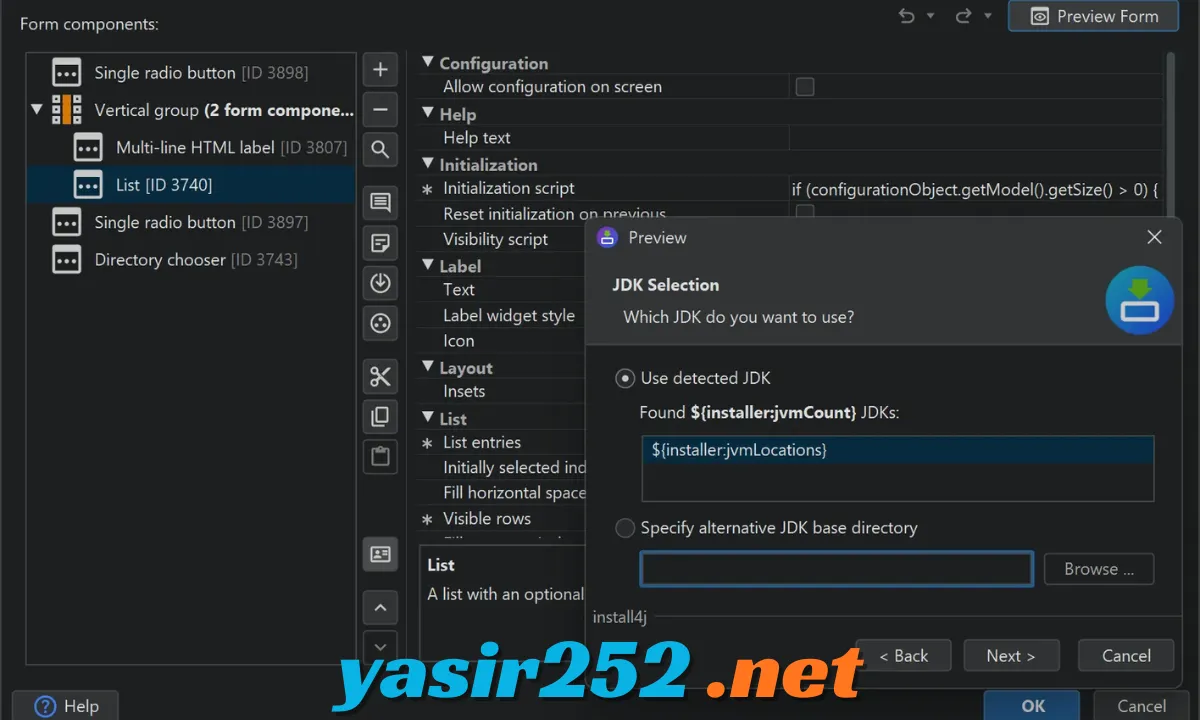
Visual Installer Designer: Use the graphical IDE to configure installation screens, actions, files, and application settings. The guided workflow helps developers build installers without manually programming every installation step.
-
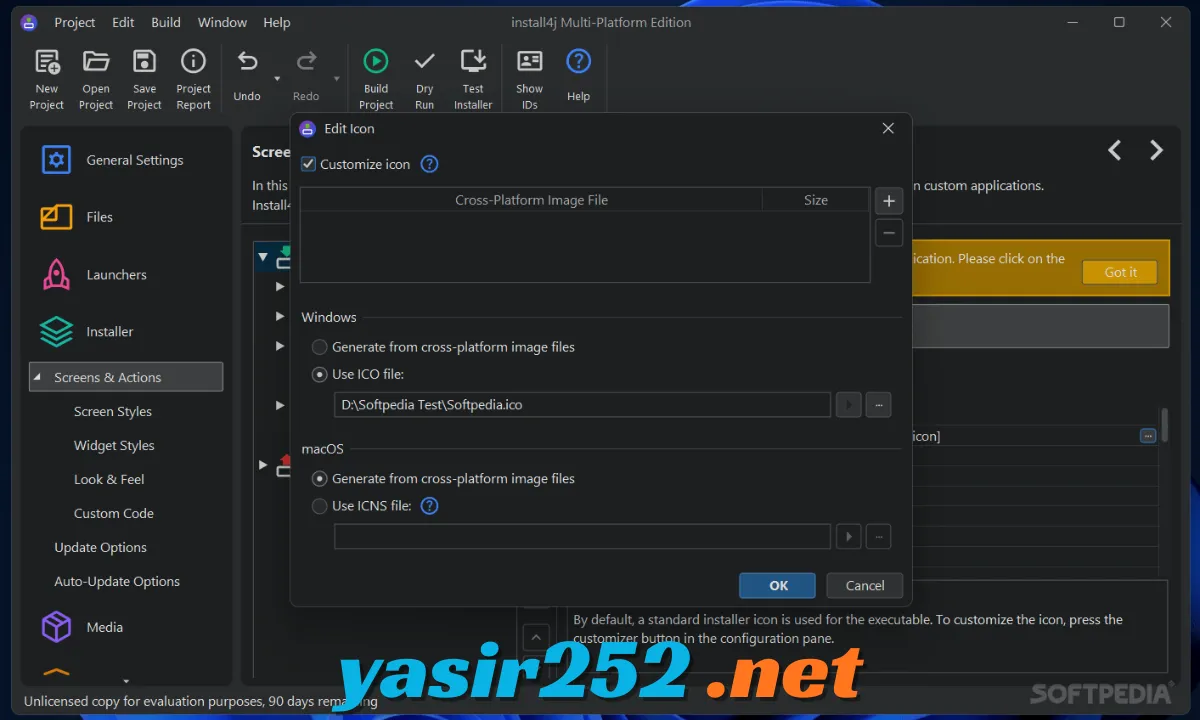
Native Application Launchers: Generate native launchers for Java applications, including GUI, console, and service executables. Configure launcher icons, splash screens, classpaths, and JVM parameters.
-
Java Runtime Bundling: Include a Java runtime environment with your application so users do not necessarily need to install Java separately. This helps simplify deployment and improve compatibility.
-
Custom Installation Screens: Design installation workflows with configurable screens and user input fields. You can collect information from users and use their selections during installation.
-
Automatic Update System: Create update mechanisms that check for new application versions and download installation packages. You can configure interactive updates, mandatory updates, and background downloading.
-
Windows Service Integration: Create launchers that install and run Java applications as Windows services. This is useful for background applications and server-side software.
-
macOS Daemon Support: Generate service launchers for macOS environments. This allows Java applications to run as background daemon processes.
-
Linux Service Support: Configure Java applications to run as Linux services. This is useful when deploying software on Linux servers.
-
Command-Line Compiler: Build installers without opening the graphical IDE. The command-line compiler is useful for automated deployment pipelines and continuous integration systems.
-
Maven Integration: Connect install4j projects with Maven-based development workflows. This helps developers include installer generation in their existing build processes.
-
Gradle Integration: Use Gradle integration to automate installer compilation and application packaging. This is particularly useful for Java projects that already use Gradle.
-
Ant Integration: Build installation packages through Apache Ant. Developers can include installer generation as part of their existing Ant build scripts.
-
Custom Installer Actions: Configure installation and uninstallation actions to perform specific tasks during deployment. The available actions can be extended with custom Java code.
-
Uninstaller Generation: Create professional uninstallers alongside application installers. This gives users a structured way to remove installed software.
-
Downloadable Components: Allow users to select optional installation components that can be downloaded when needed. This can reduce the initial installer size.
-
Flexible JVM Configuration: Configure Java virtual machine parameters for different application launchers. This provides greater control over memory, performance, and runtime behavior.
-
File and Directory Management: Configure how application files and folders are installed, updated, and removed. These options help developers prepare organized deployment packages.
-
Installation Variables: Collect user input and store information in installer variables. These values can be reused throughout the installation process.
-
Cross-Platform Development: Work with one installer project to prepare packages for different supported platforms. This reduces the need to maintain separate deployment systems.
Supported Platforms and Download Packages
install4j 13.1.1 provides different download packages depending on the operating system and processor architecture.
| Platform | Supported Architecture | Available Package | Download Size |
|---|---|---|---|
| Windows | x64 / AMD64 | EXE Installer | 166 MB |
| Windows | x64 / AMD64 | ZIP Archive | 177 MB |
| Windows ARM | ARM64 | EXE Installer | 164 MB |
| Windows ARM | ARM64 | ZIP Archive | 174 MB |
| macOS | Intel / Apple Silicon | DMG Archive | 192 MB |
| Linux | x64 | Installer | 167 MB |
| Linux | x64 | TAR.GZ Archive | 177 MB |
| Linux | x64 | RPM Package | 178 MB |
| Linux | x64 | DEB Package | 167 MB |
| Linux / Unix | POSIX-compatible systems | Installer | 113 MB |
| Linux / Unix | POSIX-compatible systems | TAR.GZ Archive | 123 MB |
Package sizes are listed for version 13.1.1 and may change with future releases.
System Requirements
Before downloading install4j, check that your computer meets the requirements for the selected platform.
| Component | Requirements |
|---|---|
| Windows | Windows 11, 10, 8, 7 and supported Windows Server versions |
| Windows ARM | Windows 11 or Windows 10 |
| macOS | macOS 10.15–27 |
| Linux | Linux x64 |
| Linux / Unix | POSIX-compatible systems |
| IDE and Compiler | JDK 25 for version 13.1.1 |
| Generated Installers | Can target Java 8 and newer |
| Storage | Sufficient free space for the selected installation package |
| Architecture | x64, ARM64, or supported platform architecture |
Important: The Java requirement for running the install4j development environment is different from the Java version targeted by the installers you create. Version 13.1.1 requires JDK 25 for its IDE and compiler, while generated installers can support applications running on Java 8 and newer.
Is EJ Technologies install4j Free to Download?
EJ Technologies install4j is commercial software, not completely free software. The developer provides an evaluation version that allows users to explore the installer-building tools before purchasing a licence.
The unregistered evaluation version has limitations, including evaluation warnings in generated installers. The evaluation period is time-limited, so it should not be treated as a permanent free edition.
If you want to download install4j for free, use the official evaluation installer. A commercial licence is required for continued professional use without evaluation restrictions.
How to Download EJ Technologies install4j
Follow these steps to download the latest version:
-
Visit the official EJ Technologies website.
-
Open the install4j download page.
-
Find the version 13.1.1 download section.
-
Select the Windows x64 installer if you use a standard 64-bit Windows computer.
-
Choose the Windows ARM64 package if your computer uses a compatible ARM processor.
-
Download the EXE installer or ZIP archive.
-
Wait for the download to finish.
-
Check the downloaded file before running the installer.
Official Download Page: https://www.ej-technologies.com/install4j/download
How to Install EJ Technologies install4j
After downloading the Windows installer, follow these steps:
-
Open the folder where you saved the installer.
-
Locate the install4j Windows setup file.
-
Double-click the EXE file.
-
Allow Windows to run the installation if prompted.
-
Follow the setup wizard instructions.
-
Select the installation location if required.
-
Complete the installation process.
-
Launch install4j from the Start menu.
-
Configure your Java development environment.
-
Start creating an installer project.
Note: Make sure JDK 25 is available for the install4j 13.1.1 IDE and compiler.
How to Install install4j on Linux
Linux users can select the package that matches their distribution.
For Debian and Ubuntu:
sudo dpkg -i <package.deb>For RPM-based distributions:
sudo rpm -i <download_filename>For TAR.GZ archives:
gunzip filename
tar xf filename
After extracting the archive, start install4j using:
install4j/bin/install4jChoose the correct package for your Linux distribution and follow the official installation instructions.
Advantages and Disadvantages
| Advantages | Disadvantages |
|---|---|
| Supports Windows, macOS, and Linux | Commercial licence required for regular professional use |
| Professional Java installer builder | Evaluation version has limitations |
| Native GUI, console, and service launchers | Requires JDK 25 for version 13.1.1 IDE and compiler |
| Automatic update functionality | Can be complex for beginners |
| Java runtime bundling | Installer packages can be relatively large |
| Maven, Gradle, and Ant integration | Advanced configurations require Java development knowledge |
| Customizable installation screens | Not intended for general-purpose non-Java installer development |
| Command-line compiler | Paid licensing may be expensive for individual developers |
Frequently Asked Questions
1. What is EJ Technologies install4j?
install4j is a professional Java installer builder used to create native installation packages and launchers for Java applications.
2. Is install4j free to download?
You can download the official evaluation version without paying, but install4j is commercial software and requires a paid licence for unrestricted professional use.
3. What is the latest version of install4j?
The latest version listed for this article is install4j 13.1.1, released on September 18, 2026.
4. Does install4j support Windows 11?
Yes. The Windows x64 version supports Windows 11, and a separate ARM64 package is also available for compatible Windows ARM devices.
5. Can I use install4j on Linux?
Yes. install4j provides Linux x64 installers, TAR.GZ archives, RPM packages, and DEB packages.
6. Does install4j support macOS?
Yes. It provides a DMG archive for supported Intel and Apple processor-based Macs.
7. What is install4j used for?
It is used to build installation packages, native launchers, update systems, and deployment tools for Java applications.
8. Does install4j require Java?
Yes. Version 13.1.1 requires JDK 25 for its IDE and compiler.
9. Can install4j create Windows EXE installers?
Yes. It can generate native Windows installation packages and executable launchers for Java applications.
10. Can install4j create macOS installers?
Yes. It supports generating native installation packages for macOS applications.
11. Does install4j support automatic updates?
Yes. It provides configurable update systems for checking, downloading, and installing application updates.
12. Can I bundle a Java runtime with my application?
Yes. install4j allows developers to bundle Java runtime environments with their applications.
13. Does install4j support Maven and Gradle?
Yes. It includes integration options for Maven, Gradle, and Apache Ant build systems.
14. Can install4j create Windows services?
Yes. It can generate service launchers that allow Java applications to run as Windows services.
15. Can install4j build installers without its graphical interface?
Yes. The command-line compiler allows developers to build installers without opening the visual IDE.
16. Does install4j support 32-bit Windows applications?
Yes. install4j 13 can generate installers for 32-bit Windows x86 applications, even though the current Windows development package is provided for 64-bit systems.
17. Where can I download install4j safely?
The safest option is the official EJ Technologies download page, which provides installers, archives, and package checksums.
Conclusion
EJ Technologies install4j is a powerful development tool for programmers who need to package and distribute Java applications professionally. Its multi-platform installer creation, native launchers, Java runtime bundling, automatic updates, and build-system integrations make it a useful solution for software deployment.
Version 13.1.1 offers support for modern Windows, macOS, and Linux environments. Although install4j is not completely free, its evaluation version gives developers an opportunity to test its features before purchasing a licence. Download it from the official website to get the correct installer for your operating system.