
GIMP 3.2.8 Download for PC Free – Latest Version for Windows 11 & 10
Looking for a free photo editor for your Windows PC? GIMP (GNU Image Manipulation Program) is a powerful image-editing application that gives you professional-style tools without requiring a paid subscription. Whether you want to retouch photos, remove backgrounds, create logos, design graphics, or work with digital artwork, GIMP provides a wide range of features in one application.
The best part is that GIMP is completely free and open-source. You can use it for personal projects, creative work, and commercial purposes without purchasing a license. It supports layers, masks, filters, brushes, selections, and many popular image formats, making it a solid alternative to expensive photo-editing programs.
GIMP – Software Information
| Field | Details |
|---|---|
| Title | GIMP (GNU Image Manipulation Program) |
| Genre | Image Editing & Graphic Design |
| Developer | The GIMP Development Team |
| Publisher | The GIMP Project |
| Franchise | GIMP |
| Release Date | November 3, 2026 (latest Windows build) |
| Version | 3.2.8 |
| License | Free and Open Source (GPL) |
| Platform | Windows, macOS, Linux |
What Is GIMP?
GIMP stands for GNU Image Manipulation Program. It is a free, open-source image editor designed for photographers, graphic designers, illustrators, and everyday PC users. You can use it to edit photographs, create digital artwork, design banners, prepare graphics, and handle many other image-related projects.
Unlike subscription-based editing software, GIMP does not require a monthly payment. It also supports plugins, scripts, and customization options, so users can extend its capabilities and adjust the workspace to suit their editing style.
Important Features of GIMP for PC
1. Advanced Photo Editing
Edit photographs using a wide range of image-adjustment tools. You can improve brightness, contrast, colors, exposure, and other image properties to get the look you want.
2. Layer-Based Editing
Work with multiple layers to build complex designs without changing the original image directly. You can reorder, hide, duplicate, and adjust individual layers.
3. Layer Masks and Selections
Use layer masks and selection tools to control which parts of an image are visible or editable. These features are especially useful for background removal, composites, and detailed photo retouching.
4. Background Removal
Select objects and separate them from their backgrounds using selection tools, masks, and transparency. This is useful for product photos, profile pictures, thumbnails, and promotional graphics.
5. Professional Color Correction
Adjust image colors, brightness, contrast, levels, curves, and other visual properties. These tools help improve photographs and create consistent results across different images.
6. Digital Painting Tools
Create illustrations and digital artwork using customizable brushes, pencils, airbrushes, and other painting tools. You can adjust brush size, opacity, spacing, and dynamics.
7. Custom Brushes and Patterns
Import and organize additional brushes, patterns, gradients, and other creative resources. This gives you more flexibility when creating artwork and graphic designs.
8. Filters and Effects
Apply different filters and effects to images, including blur, sharpening, noise reduction, artistic effects, and distortions. These tools can help transform ordinary photographs into more creative designs.
9. Text and Typography Tools
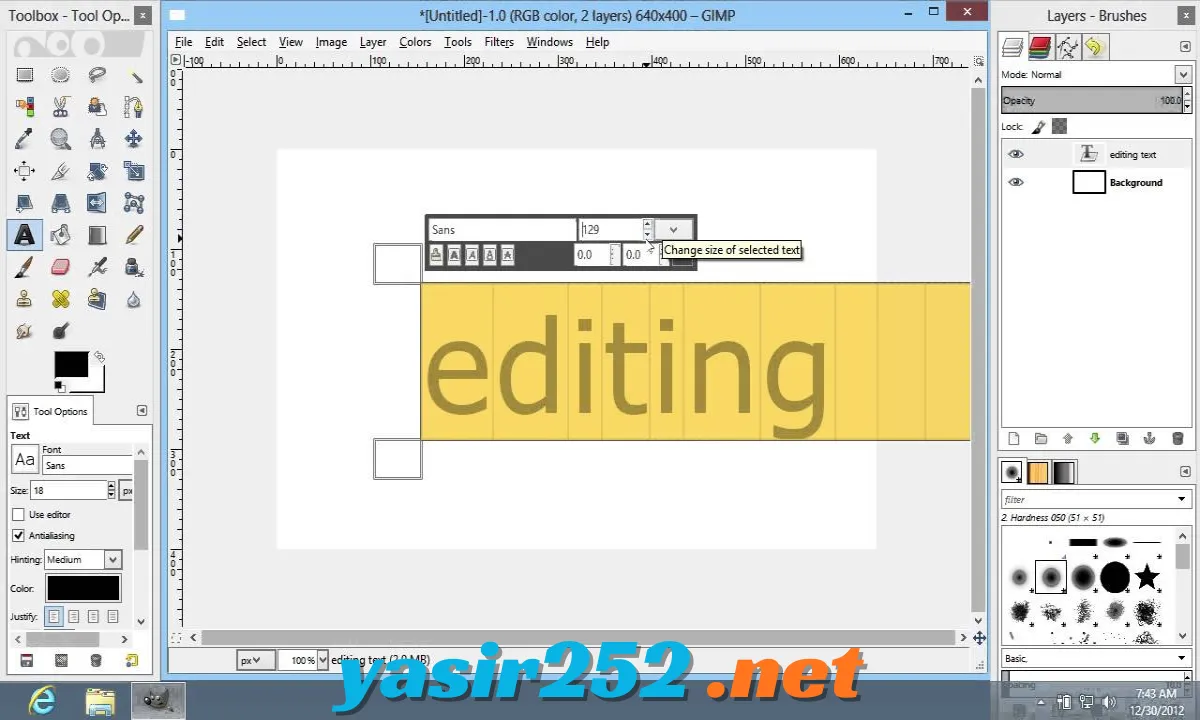
Add text to images, banners, posters, thumbnails, and other graphics. You can customize fonts, sizes, colors, alignment, and other text properties.
10. Logo and Graphic Design
Create logos, icons, social media graphics, banners, and promotional materials. GIMP provides drawing, selection, text, and layer tools for building designs from scratch.
11. Multiple Image Formats
Open and export many popular image formats, including JPEG, PNG, GIF, TIFF, BMP, and WebP. GIMP also supports its native XCF project format for preserving editable layers and other project information.
12. Animation Support
Open and work with supported animated image formats such as GIF. You can manage animation frames as layers and prepare simple animated graphics.
13. Plugin and Script Support
Extend GIMP with third-party plugins and scripts. These additions can provide extra filters, workflow improvements, and specialized image-processing features.
14. Customizable Workspace
Arrange docks, tool panels, brushes, layers, and other interface elements according to your workflow. You can also adjust themes and interface preferences.
15. High-Quality Image Export
Export finished projects into formats suitable for websites, social media, printing, and other uses. You can choose supported formats and adjust export settings.
16. Cross-Platform Compatibility
Use GIMP on Windows, macOS, and GNU/Linux. This makes it easier to work with the same editing application across different operating systems.
17. Free and Open-Source Software
Download and use GIMP without paying for a subscription or activation key. Its open-source license also allows users to study, modify, and redistribute the software under the applicable license terms.
What’s New in GIMP 3.2.8?
GIMP 3.2.8 – November 2, 2026
GIMP 3.2.8 is the latest stable release identified for this article. It includes bug fixes, security updates, interface improvements, and refinements contributed by the development community.
Some notable improvements include:
-
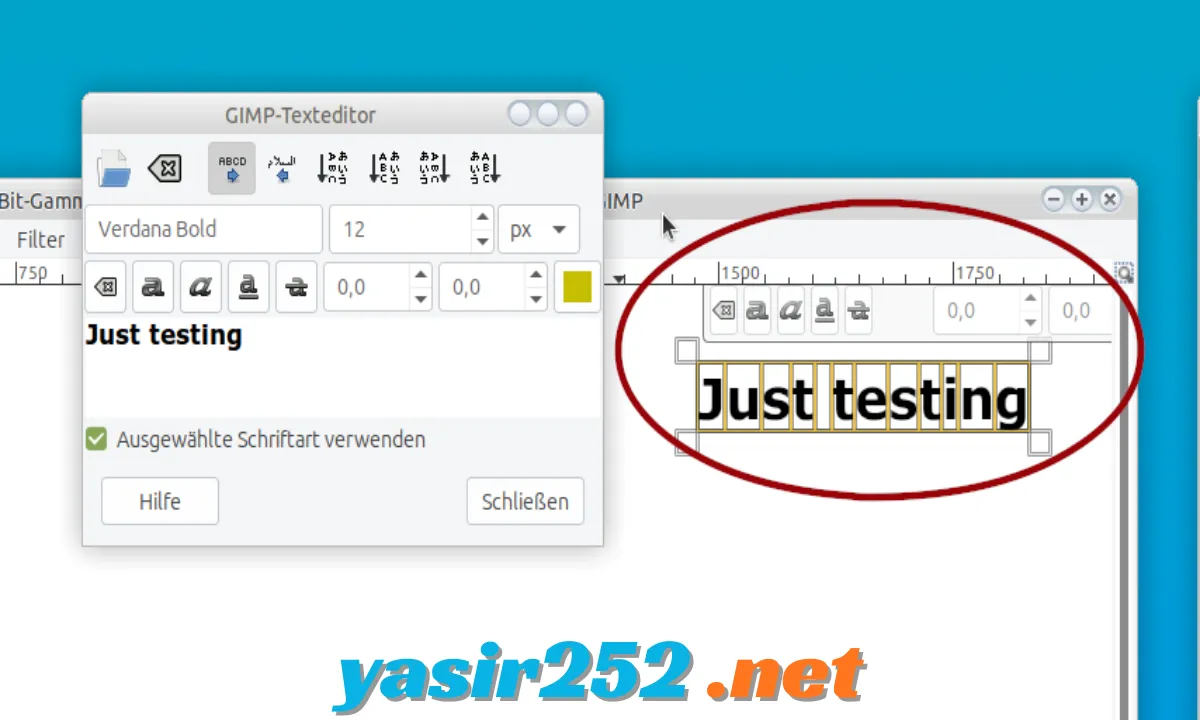
Improved Text Editing: Better cursor movement and improved support for right-to-left languages and mixed text directions.
-
Windows Interface Fixes: Resolved an issue that could make the interface appear frozen when moving the canvas after opening multiple images.
-
Vector Layer Fix: Corrected an issue that could offset vector layers incorrectly after resizing the canvas.
-
Add Border Filter: Added support for creating semi-transparent borders based on the selected color.
-
Improved Color Picking: Refinements to color-picking displays make smaller color differences easier to see.
-
Performance Improvements: Better caching for large gradients and faster display of several interface elements.
-
Image Import Fixes: Improvements to raw-data and HEIF image handling.
-
Security Updates: Fixes for reported security issues and other problems.
The Windows installer is available for both x86_64 and ARM64 systems. The Windows 3.2.8 installer package is approximately 177 MB.
Is GIMP Free to Download?
Yes! GIMP is completely free and open-source software. Unlike commercial photo editors that require subscriptions or paid activation, GIMP does not charge users for its main features.
You can use it for:
-
Personal photo editing.
-
Graphic design and digital artwork.
-
Website and social media graphics.
-
Logo and banner creation.
-
Commercial design projects.
GIMP is distributed under the GNU General Public License (GPL). You can download it, use it, and share it under the terms of that license. There is no paid trial or subscription required for the official application.
GIMP System Requirements
| Component | Requirement |
|---|---|
| Operating System | Windows 10 version 1903 or newer |
| Windows 11 | Supported |
| Architecture | x86_64 and ARM64 |
| Installer Size | Approximately 177 MB for version 3.2.8 |
| RAM | Depends on image size and editing workload |
| Processor | Compatible 64-bit Windows processor |
| Storage | Additional space required for installation, images, and projects |
| Internet Connection | Required for downloading; not generally needed for offline editing |
Note: Large images, multiple layers, and complex filters require more memory and processing power. The Windows installer compatibility information lists Windows 10 version 1903 or newer.
How to Download GIMP for PC
Follow these steps to download the latest official GIMP version:
-
Open the official GIMP download website.
-
Find the Windows download section.
-
Select the installer for your system architecture.
-
Download the GIMP setup file.
-
Wait for the download to finish.
-
Scan the installer if you want an additional security check.
-
Run the setup file to begin installation.
Official Download: Download GIMP for Windows PC
Official Windows Installer Archive: GIMP 3.2 Windows Downloads
How to Install GIMP on Windows
After downloading the setup file, follow these instructions:
-
Open your Windows Downloads folder.
-
Locate the GIMP installer.
-
Double-click the setup file.
-
Approve the Windows permission prompt if it appears.
-
Follow the installation wizard.
-
Select the installation preferences if prompted.
-
Wait until the installation finishes.
-
Launch GIMP from the Start menu or desktop shortcut.
Once the application opens, you can start editing images immediately.
How to Use GIMP for Beginners
Step 1 – Open an Image
Launch GIMP and select File > Open. Browse your computer and choose the photograph or image you want to edit.
Step 2 – Explore the Tools
Check the toolbox to find selection, crop, move, paint, text, and other editing tools. Select a tool to view its available settings.
Step 3 – Work with Layers
Open the Layers panel and create new layers for separate editing tasks. Keeping elements on different layers makes it easier to change your design later.
Step 4 – Edit Your Photograph
Use color adjustments, filters, cropping, and retouching tools to improve the image. You can experiment with different settings without permanently changing the original file if you work on separate layers.
Step 5 – Add Text or Graphics
Select the Text Tool to add titles, captions, or other text. You can also use brushes and drawing tools to create additional design elements.
Step 6 – Save Your Project
Save your editable project as an XCF file to preserve layers and editing information.
Step 7 – Export Your Image
Choose File > Export As to save a finished image in formats such as PNG, JPEG, or WebP.
Advantages and Disadvantages
| Advantages | Disadvantages |
|---|---|
| Completely free and open source | Interface can take time to learn |
| No subscription or activation required | Some workflows differ from commercial editors |
| Advanced layer and mask tools | Large projects can require significant RAM |
| Supports many image formats | Some professional file formats have limitations |
| Customizable brushes and plugins | Advanced features may feel complex for beginners |
| Available for Windows, macOS, and Linux | Not a complete replacement for every specialized design application |
Frequently Asked Questions
1. Is GIMP free to download for PC?
Yes. GIMP is free and open-source software. You can download and use its main features without paying for a subscription.
2. What is the latest version of GIMP?
The latest stable version identified for this article is GIMP 3.2.8, released on November 2, 2026.
3. Does GIMP work on Windows 11?
Yes. GIMP supports Windows 11 and Windows 10 version 1903 or newer.
4. Can I use GIMP without an internet connection?
Yes. Once installed, you can use GIMP offline for normal image editing. Internet access is only needed for activities such as downloading the application or online resources.
5. Is GIMP a good alternative to Photoshop?
GIMP is a capable free alternative for many photo-editing and graphic-design tasks. However, some specialized features and workflows available in Photoshop may not be identical.
6. Can GIMP remove image backgrounds?
Yes. You can use selection tools, layer masks, and transparency to remove or replace image backgrounds.
7. Does GIMP support layers?
Yes. GIMP supports multiple layers, layer groups, masks, and other tools for creating complex image compositions.
8. Can I create logos using GIMP?
Yes. GIMP includes text, drawing, selection, color, and layer tools that can be used to create logos and other graphics.
9. Which image formats does GIMP support?
GIMP supports many formats, including JPEG, PNG, GIF, TIFF, BMP, WebP, and its native XCF project format.
10. Can GIMP edit PNG images?
Yes. You can open, edit, and export PNG images, including images that use transparency.
11. Does GIMP support plugins?
Yes. You can extend its functionality with compatible third-party plugins and scripts.
12. Can I use GIMP for commercial work?
Yes. GIMP can be used for commercial projects under its GPL license. The license applies to the software, not automatically to every image you create with it.
13. Is GIMP available for 64-bit Windows?
Yes. The current Windows release includes an x86_64 installer and an ARM64 installer.
14. How much space does GIMP require?
The version 3.2.8 Windows installer is approximately 177 MB. Additional storage is needed for the installed program, image files, and projects.
15. Where can I download GIMP safely?
Download GIMP from the official website at gimp.org to get the genuine Windows installer.
Conclusion
GIMP is one of the best free image-editing applications available for Windows users. It offers a powerful collection of tools for photo retouching, background removal, digital painting, graphic design, text editing, and creative projects.
With its layer-based workflow, customizable brushes, filters, plugin support, and compatibility with popular image formats, GIMP is a great choice for beginners and experienced designers alike. The latest stable version, GIMP 3.2.8, also includes useful interface improvements, bug fixes, and security updates.
If you need a powerful photo editor without subscription fees, download GIMP for PC and start creating your own designs.