
SmartGit 26.1.059 Multilingual Download for Windows, macOS & Linux [2027]
SmartGit is a powerful graphical Git client that helps developers manage source code, track changes, handle branches, and work with remote repositories without relying entirely on command-line operations. It brings Git workflows into a visual interface, making version control easier to understand and manage for both beginners and experienced developers.
With SmartGit, you can connect to GitHub, GitLab, Bitbucket, Azure DevOps, and other Git repositories. Its visual commit history, branch management, merge tools, conflict resolution, and repository management features make it a practical choice for software development, collaborative projects, and daily coding workflows across Windows, macOS, and Linux.
SmartGit 26.1.059 Download Links
| Nitroflare | Rapidgator |
|---|---|
| 🟡 DOWNLOAD | 🟣 DOWNLOAD |
SmartGit Software Information
| Field | Details |
|---|---|
| Software Name | SmartGit |
| Developer | syntevo GmbH |
| Version | Latest release (check official download page) |
| Category | Git Client / Developer Tools |
| Operating System | Windows, macOS, Linux |
| License | Free for non-commercial use; paid licenses for commercial use |
| Supported Platforms | GitHub, GitLab, Bitbucket, Azure DevOps and other Git services |
| Official Website | https://www.syntevo.com/smartgit/ |
| Official Download | https://www.syntevo.com/smartgit/download/ |
What Is SmartGit?
SmartGit is a graphical user interface (GUI) for Git that allows developers to manage repositories, review source code changes, create commits, switch branches, merge updates, and resolve conflicts using visual tools. It helps simplify version control operations that can otherwise require multiple command-line commands.
The application is designed to work with local repositories and remote hosting platforms. Instead of manually running Git commands, users can perform common development tasks through menus, panels, history graphs, and contextual actions. SmartGit is particularly useful for developers who want a visual overview of their repositories and a more streamlined Git workflow.
Key Features of SmartGit
SmartGit includes a broad set of Git management tools designed to make version control more visual, efficient, and accessible.
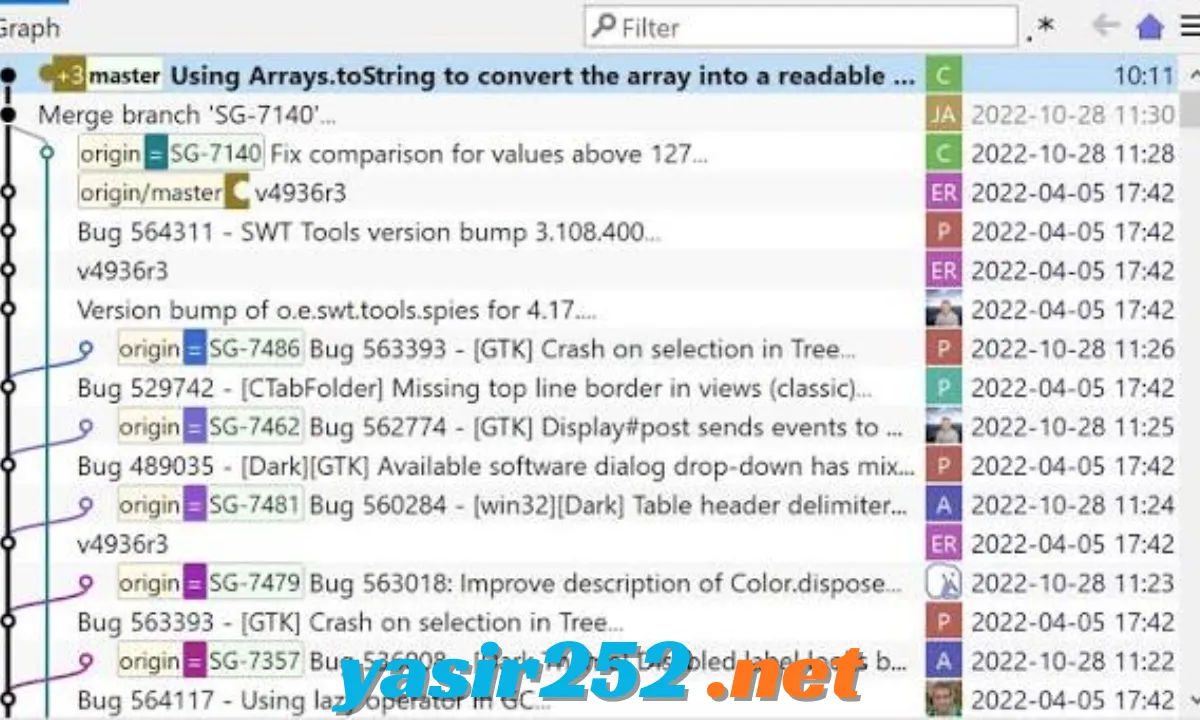
– Visual Commit History Graph: View commits, branches, tags, and merges in a graphical history view. The graph makes it easier to follow project development, understand branch relationships, and inspect previous changes.
– GitHub Integration: Connect and work with GitHub repositories, manage local projects, and synchronize changes with remote repositories through a graphical interface.
– GitLab and Bitbucket Support: Work with repositories hosted on GitLab, Bitbucket, and other Git-compatible services, making SmartGit useful across different development environments.
– Azure DevOps Integration: Manage Git repositories hosted on Azure DevOps and coordinate source-code changes within your development workflow.
– Branch Management: Create, rename, switch, merge, and manage branches visually. Branch management makes it easier to work on features, fixes, and experiments without affecting your main branch.
– Commit Management: Review modified files, inspect changes, select specific files or portions of changes, and create commits with descriptive messages.
– Merge Conflict Resolution: Identify conflicting changes and use visual tools to review and resolve merge conflicts when different branches modify the same parts of a project.
– Interactive Rebase: Reorganize, edit, squash, or manage commits through graphical controls for supported rebase operations, helping maintain a cleaner commit history.
– Git Worktree Support: Work with multiple working trees connected to a repository, allowing you to work on different branches in separate directories without repeatedly switching your main working directory.
– Staging and Unstaging: Select which files or changes should be included in a commit. Review staged and unstaged modifications separately before committing.
– Repository Cloning: Clone remote Git repositories to your local computer and begin working on source code through the SmartGit interface.
– Push, Pull, and Fetch: Synchronize local repositories with remote repositories, retrieve updates, and upload your commits using common Git operations.
– Visual Diff Viewer: Compare modified files with previous versions, inspect changes line by line, and review code before committing or merging.
– Git LFS Support: Work with Git Large File Storage workflows where supported and configured, helping manage repositories containing large assets or files.
– SSH and Authentication Support: Connect to remote Git servers using supported authentication methods and connection settings.
– Repository Management: Manage repository settings, branches, remotes, tags, and other common Git operations from a single application.
– Cross-Platform Interface: Use SmartGit across Windows, macOS, and Linux, making it convenient for developers working on different operating systems.
SmartGit for Windows, macOS, and Linux
SmartGit is a cross-platform Git GUI client that supports multiple operating systems.
SmartGit for Windows
SmartGit for Windows allows Windows developers to manage Git repositories through a graphical interface. You can clone repositories, review changes, create branches, commit files, push updates, and manage remote connections.
Download: https://www.syntevo.com/smartgit/download/
SmartGit for macOS
SmartGit is available for macOS, allowing Mac developers to use visual Git management tools for their projects. It supports repository synchronization, branch management, commits, history inspection, and other Git operations.
SmartGit for Linux
SmartGit is also available for Linux distributions. Linux developers can use it to manage Git repositories, connect to remote platforms, review commit history, and handle development workflows through a desktop interface.
Linux users should download the package provided for their supported Linux environment and consult the official installation instructions for the current system requirements.
SmartGit for Ubuntu 18.04
Ubuntu 18.04 is an older Linux release. Although SmartGit has Linux packages, compatibility with Ubuntu 18.04 depends on the particular SmartGit release and its dependencies.
If you are using Ubuntu 18.04, check the current SmartGit installation requirements before installing. Newer versions of SmartGit may require a more recent Linux environment.
How to Create a Branch in SmartGit
Creating a branch in SmartGit allows you to work on new features, bug fixes, or experimental code without directly modifying your main development branch.
-
Open SmartGit and load your Git repository.
-
Make sure the repository is properly initialized or cloned.
-
Open the branch management area.
-
Select the option to create a new branch.
-
Enter a suitable branch name, such as
feature-new-design. -
Choose the appropriate starting point for the branch.
-
Confirm the branch creation.
-
Switch to the new branch if you are not already working on it.
You can now make changes, commit them, and merge them into another branch when the work is ready.
SmartGit Commit History Graph
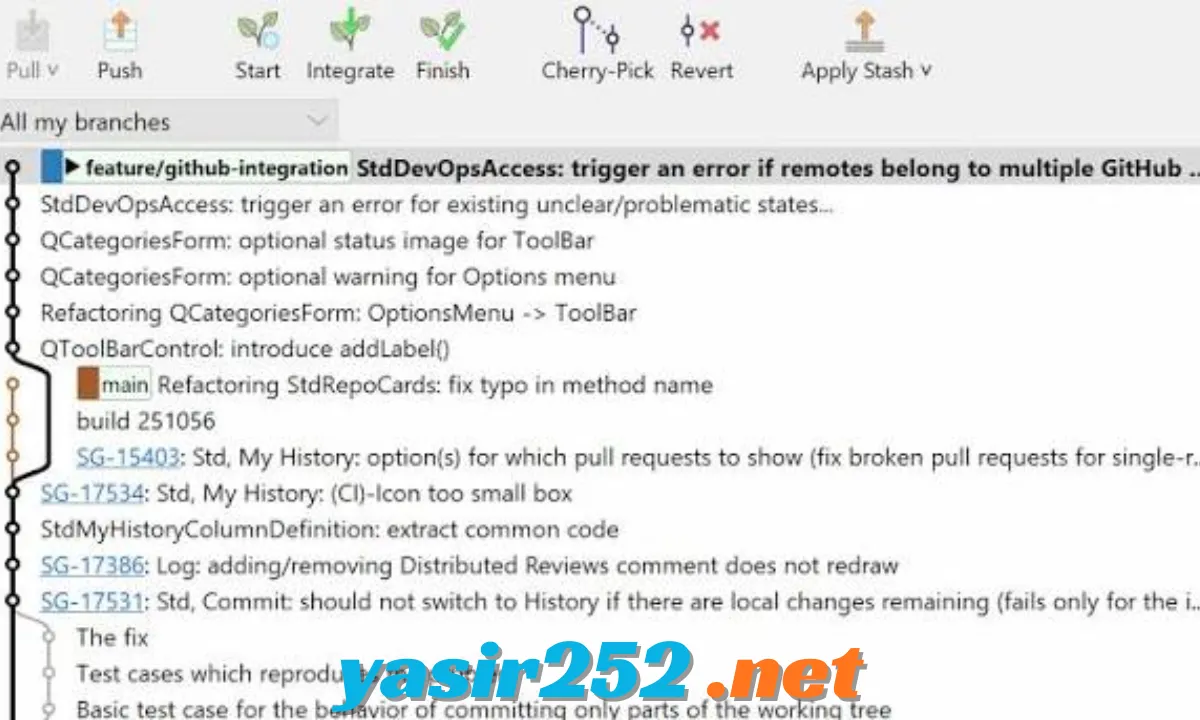
The commit history graph is one of SmartGit’s most useful features. It visually represents how a repository has evolved over time and shows the relationships between commits, branches, and merges.
Using the history graph, developers can:
-
Review previous commits.
-
Track changes across branches.
-
Understand merge relationships.
-
Identify commits made by different contributors.
-
Inspect individual file changes.
-
Navigate project history.
-
Compare revisions.
This visual overview is particularly useful in collaborative development projects where several developers work on different branches simultaneously.
How to Use SmartGit
1. Clone a Repository
Start by cloning a repository from GitHub, GitLab, Bitbucket, or another Git hosting service. Enter the repository URL, choose a local destination, and complete the cloning process.
2. Review Changes
After editing files in your project, open SmartGit to review the changes. The application displays modified, added, deleted, or otherwise changed files according to the repository state.
3. Stage Files
Select the changes you want to include in your next commit and stage them. You can review the staged changes before committing.
4. Commit Changes
Enter a descriptive commit message and create a commit. This records the selected changes in the repository’s local history.
5. Push Your Commits
Push your local commits to the remote repository to share your changes with other developers or update the remote project.
6. Pull or Fetch Updates
Fetch remote updates to inspect what has changed, or pull changes to integrate them into your local branch according to your chosen Git workflow.
7. Manage Branches
Create new branches, switch between existing branches, merge changes, and review branch relationships through SmartGit’s graphical interface.
8. Resolve Conflicts
If Git reports conflicts during a merge or other operation, use SmartGit’s conflict-resolution tools to review the affected files and resolve conflicting changes.
SmartGit Free vs Paid
SmartGit offers free use for non-commercial purposes and paid licensing options for commercial use. The appropriate license depends on how you use the software.
| License | Details |
|---|---|
| Non-commercial use | Free according to the developer’s licensing terms |
| Commercial use | Requires an appropriate commercial license |
| License key | Provided through legitimate licensing or purchase |
| Trial | Check the official website for the current trial and licensing terms |
| Updates | Availability depends on the applicable license terms |
SmartGit’s free license is intended for qualifying non-commercial use. Businesses, professional developers working commercially, and other commercial users should review the official licensing terms before using the software.
SmartGit Download and Installation Guide
Follow these instructions to install SmartGit on your computer.
-
Visit the official SmartGit website.
-
Open the download page.
-
Choose the installer for Windows, macOS, or Linux.
-
Download the appropriate package.
-
Run the installer or follow the installation instructions for your Linux distribution.
-
Complete the installation wizard.
-
Launch SmartGit.
-
Configure your Git environment and repository connections.
-
Connect your remote repository and start working.
Official Download Page: https://www.syntevo.com/smartgit/download/
System Requirements
SmartGit’s requirements can vary by version and operating system. The following is a general checklist for running a modern SmartGit release comfortably.
| Requirement | Details |
|---|---|
| Operating System | Windows, macOS, Linux |
| Processor | Modern 64-bit processor |
| RAM | 4 GB minimum recommended for basic use |
| Storage | Available space for installation and repositories |
| Internet | Required for remote repository access and downloads |
| Git | Git environment and integrations as required by configuration |
| Network | Internet or network access to remote Git hosting services |
Check the official download page for release-specific requirements, supported OS versions, and installation packages.
Advantages and Disadvantages
Advantages
-
Visual Git Interface: Makes common Git operations easier to understand and manage.
-
Cross-Platform: Available for Windows, macOS, and Linux.
-
Remote Hosting Integration: Supports GitHub, GitLab, Bitbucket, Azure DevOps, and other Git workflows.
-
Commit History Graph: Provides a visual overview of project history and branch relationships.
-
Branch Management: Helps create, switch, merge, and manage branches.
-
Conflict Resolution: Offers graphical tools for reviewing and resolving conflicts.
-
Free Non-Commercial Use: Suitable for qualifying non-commercial users.
-
Worktree Support: Makes working across multiple Git working trees more convenient.
Disadvantages
-
Learning Curve: New Git users may need time to understand branches, staging, commits, and merging.
-
Commercial Licensing: Commercial use requires an appropriate license.
-
Older OS Compatibility: Newer releases may not work with outdated operating systems.
-
Advanced Git Knowledge: Some advanced operations still require understanding Git concepts.
-
Interface Complexity: The number of available tools and panels may feel overwhelming for beginners.
SmartGit Alternatives
If you want to compare SmartGit with other Git clients, these are some popular alternatives.
| Git Client | Description |
|---|---|
| GitHub Desktop | A beginner-friendly graphical client for Git and GitHub workflows. |
| Sourcetree | A graphical Git client with branch visualization and repository management. |
| GitKraken | A modern Git GUI with visual repository management and collaboration features. |
| TortoiseGit | A Windows Git client integrated with Windows Explorer. |
| Git CLI | The command-line Git tool for direct control over version control operations. |
Frequently Asked Questions (FAQs)
1. What is SmartGit?
SmartGit is a graphical Git client that helps developers manage repositories, commits, branches, merges, and remote connections through a desktop interface.
2. Is SmartGit free?
SmartGit is free for qualifying non-commercial use. Commercial users need an appropriate commercial license.
3. Where can I download SmartGit?
You can download SmartGit from the official website at https://www.syntevo.com/smartgit/download/.
4. Does SmartGit support GitHub?
Yes, SmartGit supports GitHub repositories and Git workflows.
5. Can I use SmartGit with GitLab?
Yes, SmartGit supports GitLab and Git-compatible repositories.
6. Is SmartGit available for Linux?
Yes, SmartGit offers Linux downloads. Check the official download page for supported distributions and installation requirements.
7. Does SmartGit work on Ubuntu 18.04?
Compatibility depends on the SmartGit version and its dependencies. Ubuntu 18.04 is an older distribution, so check the current requirements before installation.
8. Is SmartGit available for macOS?
Yes, SmartGit is available for macOS and provides graphical Git repository management.
9. How do I create a branch in SmartGit?
Open your repository, use the branch management tools to create a branch, enter a name, and select the starting point. You can then switch to the new branch and work on it.
10. What is the SmartGit commit history graph?
The commit history graph visually displays commits, branches, tags, and merge relationships, helping developers understand how a project has evolved.
11. Does SmartGit support Git worktrees?
SmartGit supports Git worktree workflows, allowing users to work with multiple working trees associated with a repository.
12. Does SmartGit require a license key?
A license is required for commercial use under the applicable licensing terms. Qualifying non-commercial users can use the free license according to the developer’s terms.
13. Is SmartGit better than GitHub Desktop?
SmartGit provides a broader range of Git management tools and supports several hosting platforms. GitHub Desktop is often easier for beginners who primarily use GitHub.
14. Can SmartGit resolve merge conflicts?
Yes, SmartGit provides graphical tools to inspect and resolve merge conflicts during Git operations.
15. Does SmartGit support Bitbucket?
Yes, SmartGit supports Bitbucket and Git workflows involving Bitbucket repositories.
16. Can I use SmartGit without GitHub?
Yes, SmartGit works with local repositories and various Git hosting services. You do not need a GitHub account to manage a local Git repository.
17. Does SmartGit support SSH?
Yes, SmartGit supports SSH-based remote connections where properly configured.
18. Is SmartGit suitable for beginners?
Yes, it can help beginners learn Git by visualizing commits, branches, file changes, and repository operations. Some basic understanding of Git terminology is still helpful.
19. Does SmartGit support interactive rebase?
Yes, SmartGit provides graphical support for interactive rebase operations, helping users manage and reorganize commit history.
20. Is SmartGit available in 32-bit version?
Modern SmartGit releases are generally designed for current 64-bit systems. Check the official download page for architecture availability for your specific release.
Conclusion
SmartGit is a powerful Git GUI client for developers who want to manage source code, repositories, branches, commits, and remote projects through a visual interface. Its commit history graph, merge conflict tools, interactive rebase, Git worktree support, and integration with GitHub, GitLab, Bitbucket, and Azure DevOps make it a useful tool for everyday development.
SmartGit is available for Windows, macOS, and Linux, and it is free for qualifying non-commercial use. If you are looking for a reliable graphical Git client to simplify your version control workflow, SmartGit is worth exploring.